
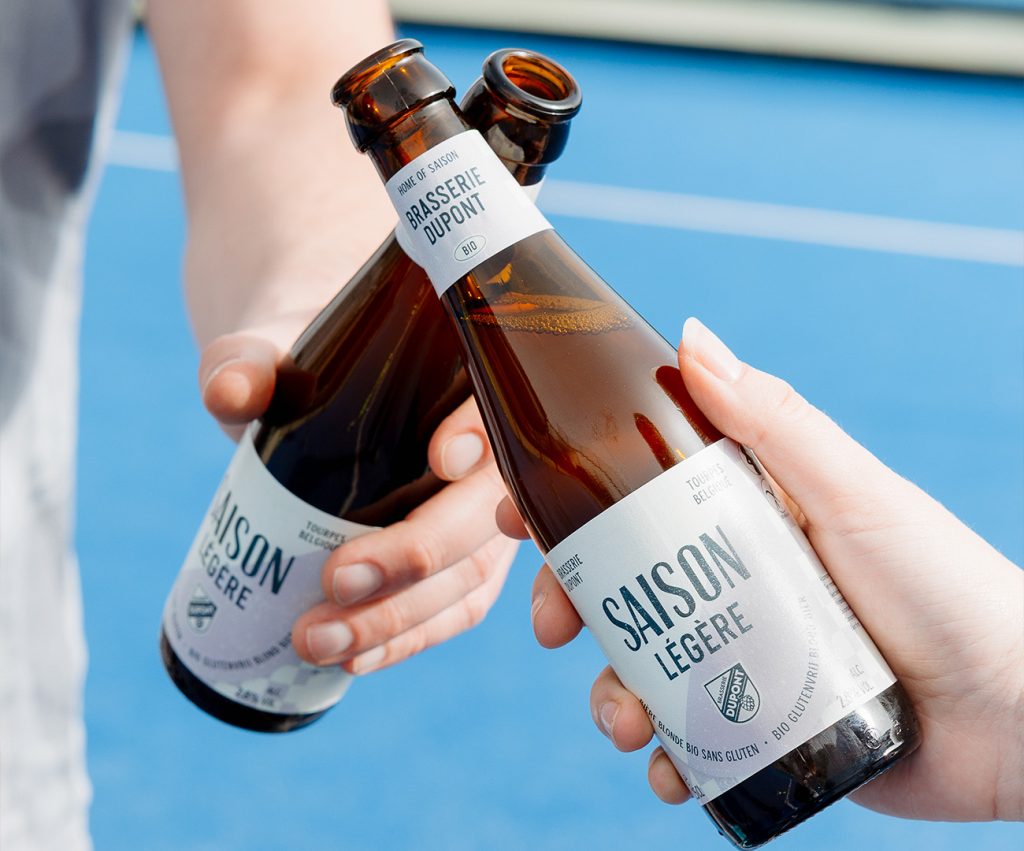
Brasserie Dupont welcomes two new beers to its range: La Fomo and La Saison Légère. Two beers that continue the work carried out by the brewery while responding to a growing expectation among beer lovers: the possibility of enjoying a characterful beer while avoiding gluten.
This need particularly concerns people suffering from coeliac disease, for whom the consumption of gluten is impossible. It is estimated that around 1% of the population in Belgium is affected. But it also reflects a broader evolution in eating habits: today, 8 to 10% of Belgians say they voluntarily limit their gluten consumption, even without a formal medical diagnosis.
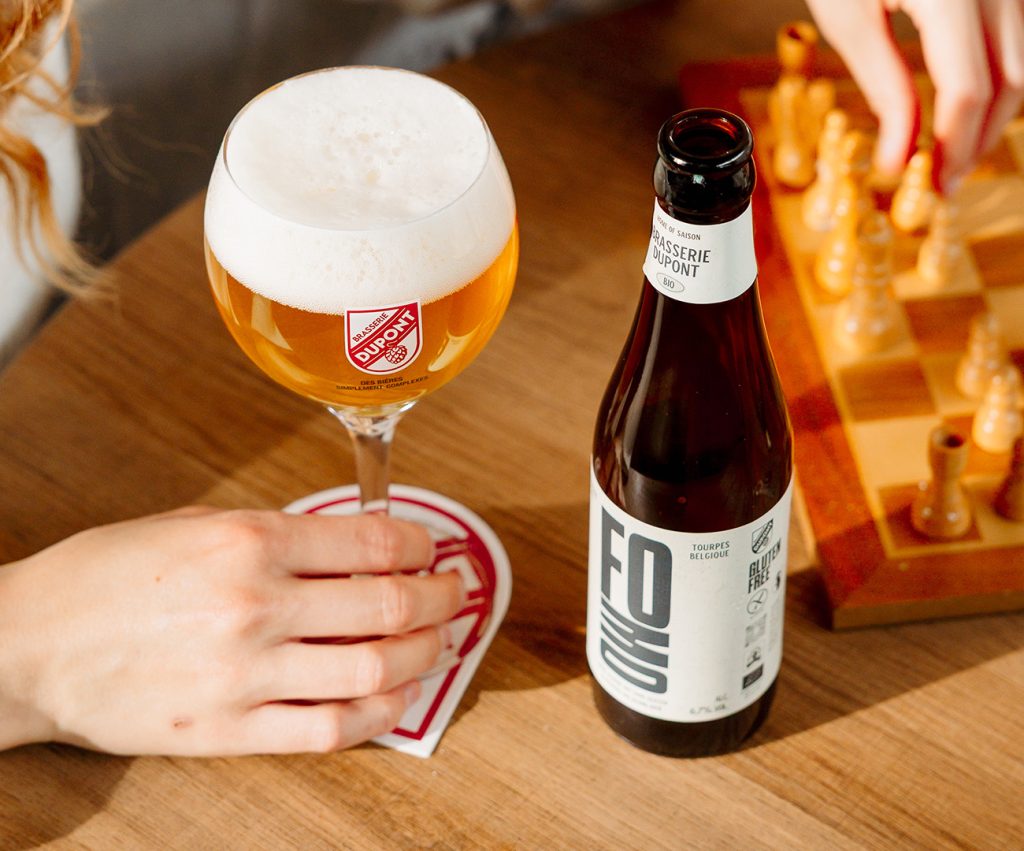
As is often the case at the brewery, the objective was not to follow a trend, but to find the right balance. How can beers that remain faithful to the identity of Dupont be offered while also taking new expectations into account? The answer was built gradually, brew after brew, with the same attention given to raw materials, time and, flavour balance.
The arrival of these two beers is also an opportunity to explain more simply how it is possible to reduce the presence of gluten in beer.
Why is there gluten in beer?
Beer is traditionally brewed from cereals such as barley or wheat. These cereals naturally contain gluten, a protein that accompanies the beer throughout its production.
During brewing and fermentation, these proteins already evolve naturally. But depending on recipes and methods, traces may remain in the final beer.
In recent years, certain processes have made it possible to go further and reduce this presence while preserving the character of the beer.
At the heart of the deglutenisation process
Deglutenisation consists of intervening during the brewing process in order to reduce the quantity of gluten present in the beer.
A specific enzyme is introduced during fermentation. It gradually acts on gluten proteins and breaks them down. This action lowers the gluten content of the final product while keeping the cereals traditionally used in brewing.
In some recipes, the partial use of naturally gluten-free cereals, such as buckwheat, also helps reduce the presence of this protein from the outset.
The objective remains the same as for every beer produced by the brewery: to preserve the balance, taste and personality of the product.
A monitored and controlled level
As with every beer produced at Brasserie Dupont, consistency and quality remain central priorities.
The gluten content is therefore measured and checked to ensure that it complies with the thresholds defined by European regulations for gluten-free beers.
Particular attention is also paid to the organisation of the brewing process. Gluten-free beers are produced at the beginning of the production cycle, when the tanks and installations have just been carefully cleaned, in order to limit any risk of cross-contamination with other brews containing gluten.
These controls and practices make it possible to provide consumers with clear and transparent information.
The Crossed Grain certification
Some beers can also obtain the Crossed Grain certification, a recognised European label confirming compliance with a strict set of specifications.
This certification involves regular inspections, product analyses and precise monitoring of production methods. It is granted under licence by the Association of European Coeliac Societies.
At Brasserie Dupont, La Fomo and La Saison Légère benefit from this certification, guaranteeing a gluten content below the regulatory threshold and rigorous monitoring throughout their production.
The “Crossed Grain” logo on the label therefore serves as a clear reference for those who wish to avoid gluten while continuing to enjoy a beer brewed in the purest tradition.